LedgerLite SG LedgerLite SG Cloud accounting for sole traders
A shophouse back-office desk at 8am, lit by one raking lamp, with an open ruled ledger, a cup of kopi and folded receipts on the blotter

Cloud accounting for Singapore sole traders

Folio 01

Most one-person businesses in Singapore do not need a finance department. They need a ledger that is ruled the same way every morning: money in, money out, receipts attached, and a statement of accounts that comes together at year end without a scramble.

Your morning ledger, ruled and stamped.

Open a cloud ledger workspace and keep income, expenses and IRAS-ready records in one book from your first day of trading.

No accountancy background assumed. You start with a book that carries your UEN on every document it prints.

Open one cloud ledger and start the first entry

Folio 02

The primary action on this page is opening a cloud ledger workspace. You sign up with your name, your UEN and the year you began trading, and you land in a book that carries that entity metadata on every invoice and report. Your UEN sits in the header of what the book prints, which matters the moment you send a client a document they need to file. Nothing about the setup assumes you already know accounting.

  1. 1

    Set the entity on the book

    Legal name, UEN and the date you started trading go in once. Every invoice, payment voucher and report the workspace produces then carries the same details without being retyped.

  2. 2

    Record income where it lands

    Raise the invoice, then mark the deposit that settles it. A cash payment taken at a stall can be entered from a phone the same day, so the income lane stays level with the bank.

  3. 3

    Photograph and tag the receipt

    Take the picture at the counter and give it a category before you put the phone away. A receipt with a category is a deduction waiting to be claimed; a receipt without one is just a photo.

  4. 4

    Match the bank feed to the paperwork

    Every bank line gets matched to the invoice, receipt or payment voucher behind it. Anything unmatched stays visible as an open question rather than quietly disappearing into the month.

  5. 5

    Read the period, not the pile

    At period end the workspace assembles the Profit and Loss Account and the Balance Sheet from what is already in the book, so preparing the statement of accounts is a review, not a reconstruction.

Three places money lands: income, expenses, documents

Folio 03

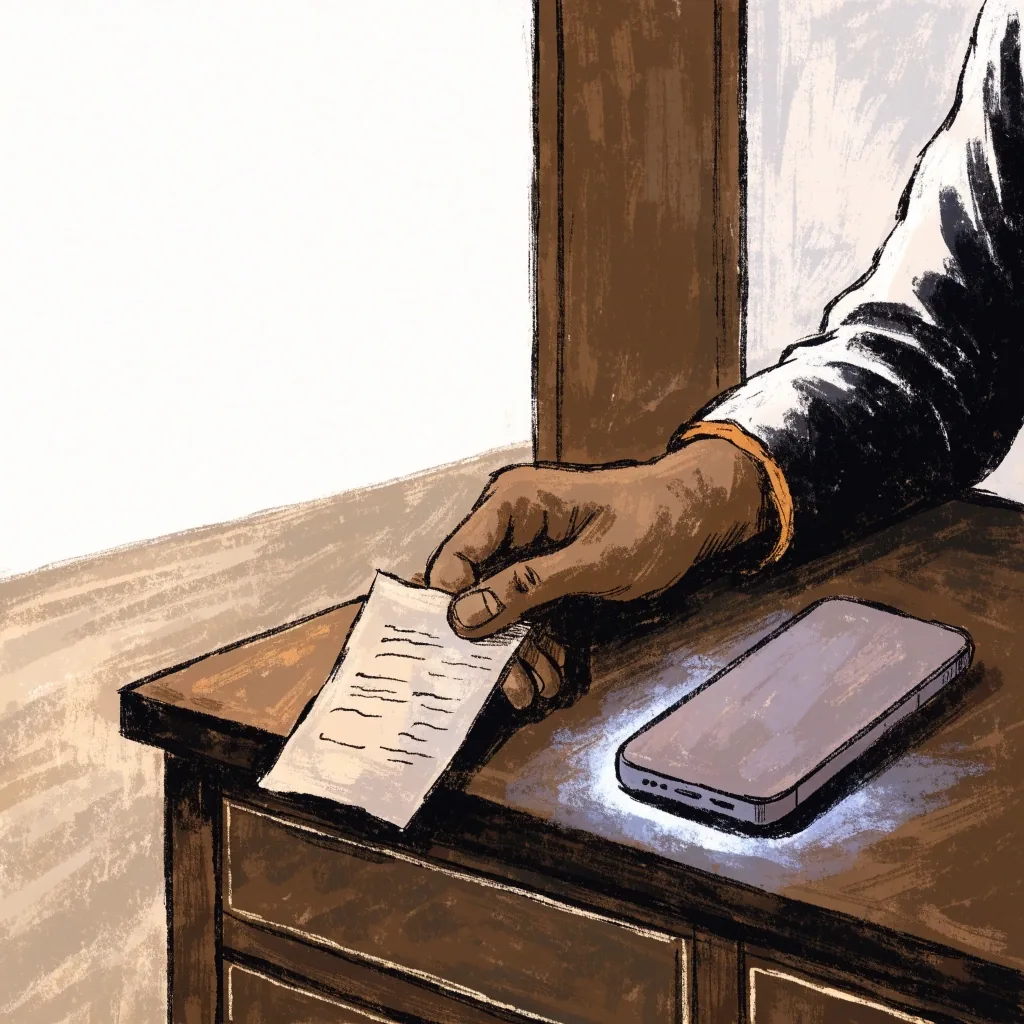
A painted illustration of a hand holding a paper receipt beside a phone on a desk under warm raking daylight

A receipt and the phone that holds the deposit behind it. Keeping the two in the same book is what removes the year-end search.

Income
Your invoices and the deposits behind them, whether a client pays by transfer, by PayNow or in cash at the counter.
Expenses
The receipts in your pocket and the bank lines that match them, tagged by category so allowable business expenses survive review.
Documents
The support underneath both lanes: the invoice, the receipt, the payment voucher, the bank statement. Keep the three straight week by week and assembly replaces archaeology.

The margin rule: bank lines meet documents

Folio 04

Bank reconciliation is the discipline that makes a ledger trustworthy, and it is simpler than the name suggests. You take the bank feed, you match each line to what it represents, and anything unmatched stays visible as a question rather than disappearing.

Self-employed filing guidance repeats one point often: accounts must be supported by invoices, receipts, payment vouchers and statements. The margin rule in your ledger is where that support lives, one line at a time.

A worked month

  • Client invoice paid into the bank matched
  • Courier run paid by card, voucher filed matched
  • Cash sale at the stall, no slip kept open
  • Bank charge with nothing behind it open

The two open lines are not errors. They are this week's work, and they are the reason the period closes cleanly.

Two lines or four, depending on your revenue

Folio 05

Small sole proprietors can report business income with a two-line or four-line statement instead of full accounts, and the choice hangs on your revenue for the year. Your book should tell you which one applies before you sit down to file.

Two-line statement

Revenue and adjusted profit

The shorter form reports the two figures that matter: what came in, and what is left after allowable business expenses. It suits a business whose capital spending is light enough that separate allowance lines would say nothing.

Revenue
line one
Adjusted profit
line two

Four-line statement

Adds the capital allowance lines

The longer form shows how the profit figure was reached, carried by opening and closing allowances for capital expenditure on top of revenue and adjusted profit. If you bought equipment for the business, this statement is where that purchase is visible rather than folded into a single number.

Revenue
line one
Adjusted profit before allowances
line two
Less: capital allowances
line three
Adjusted profit
line four

Four lines, one profit figure

What you keep, and for how long

Folio 06

Records start from the first day of business, not from the year you first owe tax. Guidance for self-employed people and for online sellers and service providers both point to the same retention period: five years. That includes the boring items, like the payment voucher for a courier run and the bank statement showing it cleared.

Invoices
Every sale you billed, with the client and the amount shown.
Receipts
The proof of what you spent running the business, tagged to a category.
Vouchers
The payment voucher behind a cash or card payment, small ones included.
Statements
Bank statements showing each amount cleared, month by month.
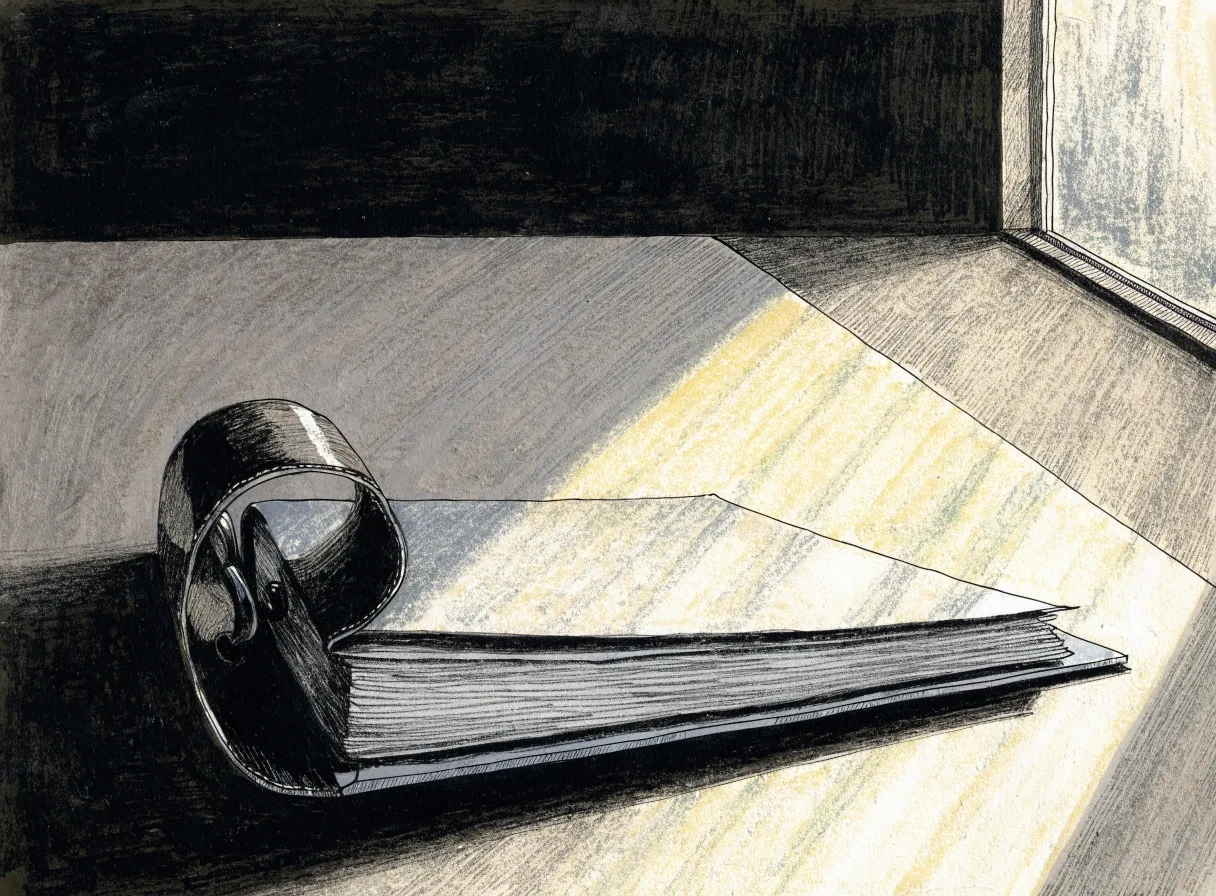
A painted illustration of an open ring binder with a leather tab on a desk under warm raking light

The five-year rule

Keep invoices, receipts, payment vouchers and bank statements for five years, counted from the relevant Year of Assessment, because the accounts have to be supported by them. Cloud storage turns that from a filing-cabinet problem into a folder you never have to empty.

Read the IRAS record-keeping guide

Invoicing without a design detour

An invoice for a one-person business needs the same core facts every time: your business name and UEN, the client, what you did, when, and how much. LedgerLite drafts from a template so the UEN and the running invoice number are already in place. If a client needs a PDF, you send a PDF. If they need the amount broken out, the line items are already there.

Nothing here asks you to art-direct a document. The draft is plain on purpose: the facts are legible, the numbering never restarts, and the same business name sits on the invoice as on the statement of accounts you prepare at period end.

On the invoice
Your registered business name and UEN, taken from the entity details you set once.
Client and work
Who the invoice is for, what was supplied, the date it was supplied and the amount due.
Line items
Each job broken out with its own amount, so a client query is answered by the document itself.
Numbering
A running series that never restarts when the year turns, so a client can find their copy.
The payment behind it
When the amount clears, the invoice closes against the bank line rather than staying open.

Expense capture as a daily habit, not a tax-season project

Folio 07

Expense tracking works when it is short and close to the event. Photograph the receipt at the counter, tag it, and it is filed. What makes it tax-relevant is the category: adjusted profit is calculated after allowable business expenses, and only the ones you can support with documents survive review.

A receipt without a category is a photo. A receipt with a category is a deduction. The habit takes about ten seconds per slip, and it is the difference between a bank line you can explain and one you have to reconstruct months later from memory.

Cash-heavy businesses feel this most. A hawker stall, a delivery run or a weekend side hustle collects the same slips as any service company; only the volume of paper differs. The standard of record is unchanged.

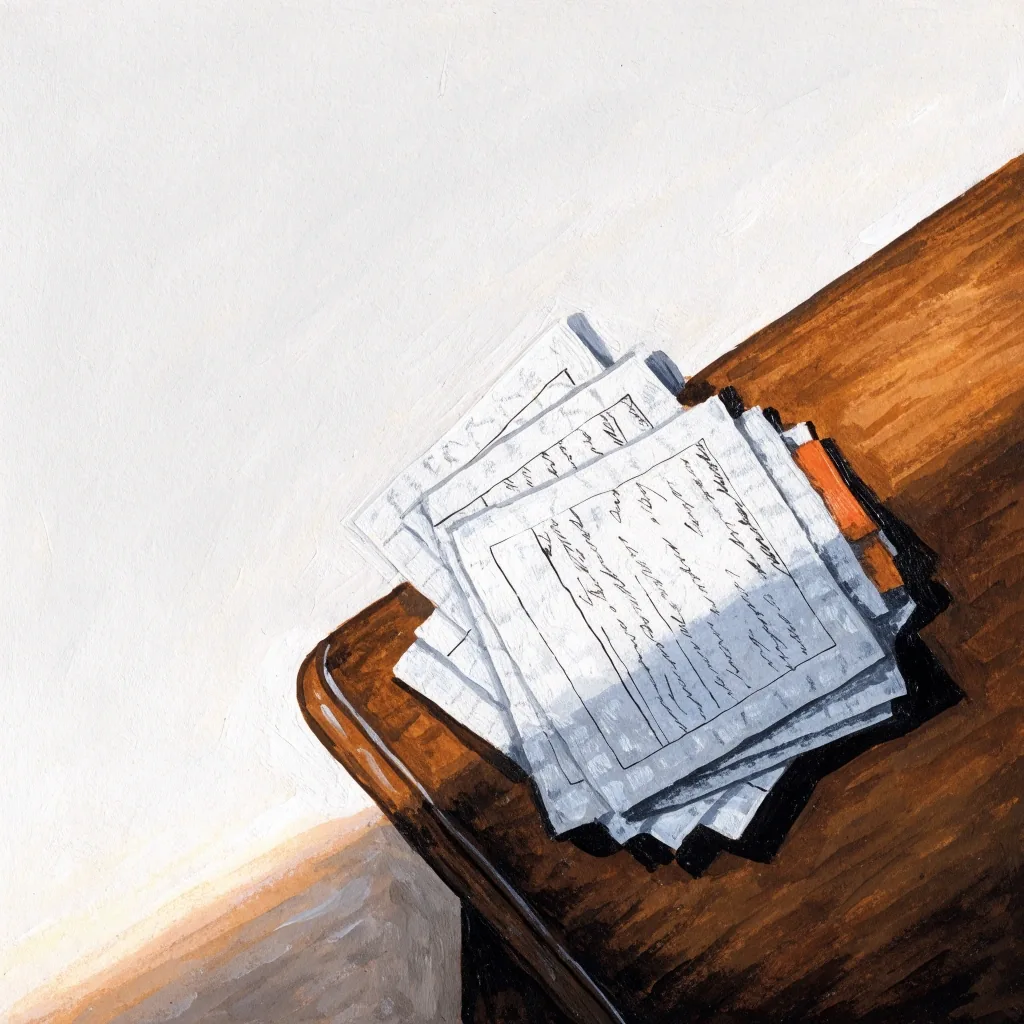
A painted overhead crop of squared receipts clipped on a desk edge with an orange folder tab at the right

Ten seconds at the counter keeps a month of receipts out of the year-end pile.

Hawkers, side hustles and service businesses follow the same rule

Folio 08

IRAS record-keeping guidance for hawkers applies the same standard as the general self-employed guide: proper records and accounts for five years, supported by invoices, receipts, payment vouchers and statements. A cash-heavy business has the harder version of the same job, because nothing arrives pre-reconciled. The discipline is identical; the number of paper slips is not.

A hawker stall

Takings arrive as cash through the day. The work is entering the day's total and keeping the supplier slips that support the cost lines.

A weekend side hustle

A few invoices a month, paid by transfer. The bank feed does most of the matching; the receipts are the part you have to keep up with.

A one-person service firm

Steady invoicing with occasional equipment spending. This is the case where the four-line statement earns its extra two lines.

What a clean ledger gives back at period end

At the end of the accounting period, your statement of accounts is a Profit and Loss Account and a Balance Sheet. The P&L comes from your income and expenses. The Balance Sheet comes from what the business owns and owes. If your book has been kept current, preparing the statement is a review rather than a reconstruction.

Where each figure comes from

Profit and Loss Account
Built from the income lane and the expense lane, after allowable business expenses are taken off.
Balance Sheet
Built from what the business owns and owes on the closing date, including money still owed to you.

The accounts still have to be prepared even when they are not submitted immediately. Preparing them early is what keeps the figures defensible.

Before you file, check the three things that trip people up

Folio 09

1 Which statement you are filing

Whether this year goes out as a two-line or a four-line statement. The answer follows your revenue and whether you have capital allowances to show. Your book can carry both versions so the choice is a comparison rather than a guess.

2 Whether every claim has a document

Walk the expense lane and check that each claimed amount has an invoice, receipt, payment voucher or statement behind it. Unsupported amounts are the ones that get removed in review, taking the deduction with them.

3 Whether your invoices match your registration

Confirm the business name and UEN printed on your invoices are the ones on your ACRA registration. A mismatch between the two is the kind of detail that turns a short filing conversation into a long one.

Fix those three in the book before tax season and the filing conversation gets very short. The figures, the support and the entity details are already sitting together.

One cloud plan, sized for one person

See the plan details

The accounting market in Singapore offers entry-level cloud plans aimed squarely at sole traders, new businesses and the self-employed. The useful question is not which plan has the most features. It is how much of the year-end statement of accounts you can reach from records you already keep.

If a feature never touches your monthly routine, it is not saving you time; it is adding a menu. LedgerLite keeps to the lanes a one-person book actually uses: income, expenses, documents, and the statement the year ends on.

Entity details on every document included
Income and expense lanes with categories included
Bank feed matching against documents included
Two-line and four-line statement views included
Five-year record retention in the cloud included
Multi-factor authentication on the workspace included

One plan, no tiers to compare. The current monthly price and what it covers sits on the pricing page.

Bank feeds, mobile access and secure sign-in

A cloud book should follow you to the hawker centre and the co-working desk. Bank feeds pull transactions in for matching, and you can add an entry from a phone when a client pays in cash. The workspace holds your revenue figures and client names, so it is protected the way any business record should be.

Multi-factor authentication protects the workspace because it holds your revenue figures and client names. Use a unique password and keep the second factor on a device you carry rather than on the machine you also use for browsing.

Bank feeds
Transactions arrive for matching instead of being typed in from a statement.
Mobile entry
Add an entry at the counter, the market or the client's office, before the detail fades.
Sign-in
Multi-factor authentication on the workspace, with a unique password you do not reuse elsewhere.

Questions people ask before they start

Folio 10

Q Do I need to keep receipts for five years as a sole proprietor?

Guidance for self-employed people and for online sellers and service providers both point to five years, counting from the relevant Year of Assessment. Keep invoices, receipts, payment vouchers and bank statements for that period, since the accounts have to be supported by them.

Q What is the difference between the two-line and four-line statement?

A two-line statement reports revenue and adjusted profit. A four-line statement adds the allowances for capital expenditure and shows how the profit figure was reached, with opening and closing allowance lines. Which one applies to you depends on your revenue for the year.

Q Can cloud accounting software help with IRAS filing?

Software helps you keep the records and figures IRAS expects; the filing itself is still yours and stays with you on myTax Portal. A clean book makes preparing your statement of accounts a review rather than a reconstruction.

Q Is a spreadsheet enough, or do I need accounting software?

A spreadsheet can hold income and expenses, and it can break the moment you need matching bank lines, attached receipts and an audit trail. The deciding factor is usually whether you can produce supported records quickly for a given period.

Start the book the morning you register

Set the entity once, record the first entry, and let the ledger carry the UEN, the categories and the matching from there. LedgerLite SG is a cloud accounting resource and onboarding guide for sole proprietors, self-employed people and one-person businesses in Singapore.

Open a cloud ledger workspace

Questions before you open the workspace reach the team Monday to Friday, 9:00 AM – 6:00 PM SGT, at +65 6894 7430 or [email protected].

Read the IRAS record-keeping guide

LedgerLite SG is an independent cloud bookkeeping resource for Singapore sole traders. It is not affiliated with IRAS, and the filing itself stays with you on myTax Portal.